🚨 What Would You Do? 10 Dangerous Driving Situations You Could Face on the Road
Imagine you're driving to work.
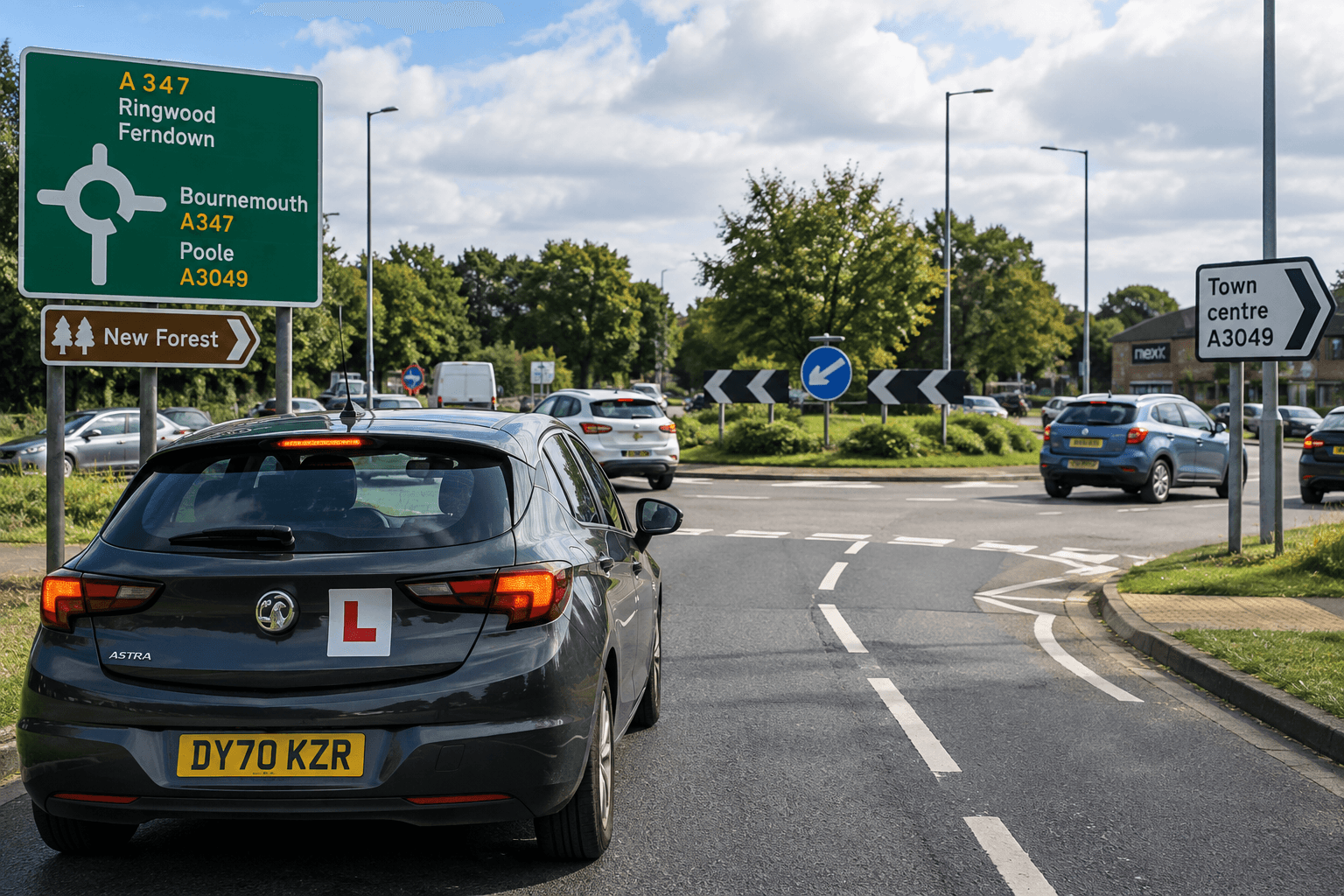
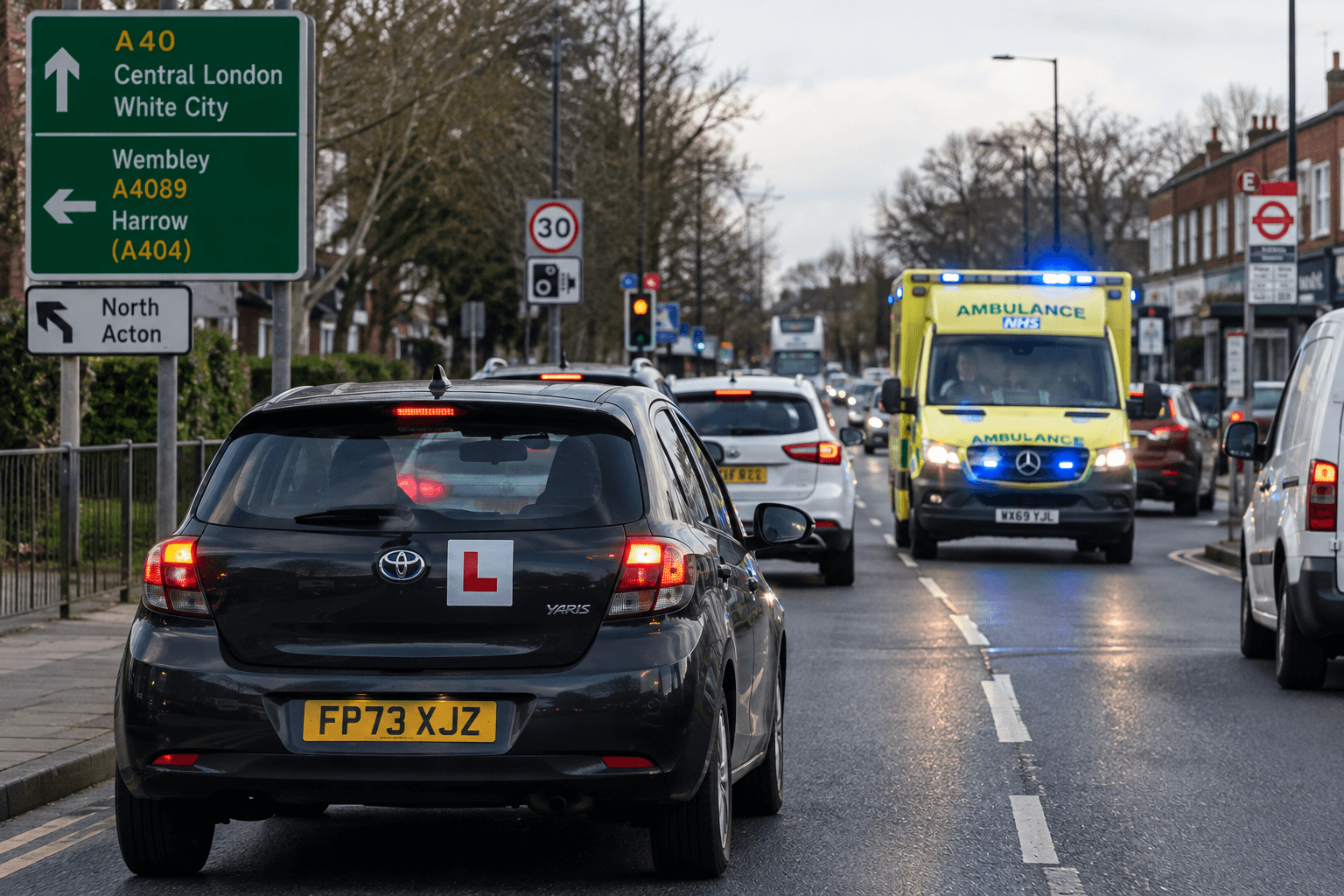
You're approaching a busy roundabout when an ambulance suddenly appears behind you with its blue lights and siren on.
What do you do?
Do you brake immediately?
Move onto the pavement?
Continue driving?
Or find a safe way to let it pass?
Situations like this are exactly why the UK driving theory test isn't simply about memorising road signs. You need to understand how to react safely when circumstances change.
Let's test your judgement.
🚑 1. An Emergency Vehicle Is Approaching
You hear a siren behind you.
Your first instinct might be to panic and immediately stop.
But that isn't necessarily the safest response.
You should:
- Stay calm.
- Look and listen carefully.
- Consider the emergency vehicle's route.
- Take appropriate action to let it pass.
- Continue obeying traffic signs.
- Stop if necessary when it is safe to do so.
- Avoid stopping where you could create another hazard.
The Highway Code specifically advises drivers not to brake harshly when approaching a junction or roundabout, because a following driver may not have the same view as you.
🧠 Theory test trap
"Stop immediately wherever you are."
That isn't always the safest answer.
Think about the whole traffic situation, not just the emergency vehicle.
🚦 2. The Traffic Light Changes to Green
Green doesn't mean:
"Go without looking."
Before moving, make sure the junction is clear and that there are no road users still crossing.
Look for:
- Pedestrians
- Cyclists
- Vehicles completing their turn
- Vehicles blocking the junction
- Emergency vehicles
- Other unexpected hazards
Remember:
Green means you may proceed when it is safe to do so.
🚲 3. A Cyclist Moves Into Your Lane
You're approaching a cyclist who is riding close to the edge of the road.
Suddenly, they move further into your lane.
What should you do?
Don't assume they're deliberately blocking you.
They may be avoiding:
- A pothole
- A parked vehicle
- A drain
- Road debris
- An opening car door
- Another hazard
Reduce your speed and give them appropriate space.
If you can't pass safely, wait.
Being delayed for a few seconds is far better than creating a dangerous situation.
👶 4. You See Children Near Parked Cars
You're driving through a residential street.
You see several parked cars and children playing nearby.
What should you expect?
A child could suddenly move into the road.
You should:
- Reduce your speed.
- Look carefully between parked vehicles.
- Be prepared to stop.
- Expect children to behave unpredictably.
- Avoid assuming that they have seen you.
🚨 Think ahead
The best drivers don't only react to hazards.
They anticipate what might happen next.
🚗 5. A Car Is Parked Ahead
A parked car isn't necessarily a developing hazard.
But what if you notice:
- The driver's door opening?
- Brake lights?
- An indicator?
- The vehicle starting to move?
- Someone standing beside it?
Now the situation may be developing.
You may need to change your speed or position.
This is exactly the kind of observation tested in hazard perception.
GOV.UK defines a developing hazard as something that would cause you to take action, such as changing speed or direction.
🌧️ 6. Heavy Rain Starts Suddenly
You're travelling at the speed limit when heavy rain begins.
Should you continue at the same speed?
Not necessarily.
Rain can affect:
- Visibility
- Road grip
- Stopping distance
- Your ability to see hazards
You should adapt your driving to the conditions.
🧠 The golden rule
The speed limit is a maximum, not a target.
🛣️ 7. Traffic Suddenly Stops on a Motorway
You're travelling on a motorway and traffic ahead begins slowing rapidly.
What should you do?
Don't wait until you're dangerously close to the vehicle ahead.
You should:
- Check your mirrors.
- Reduce speed smoothly.
- Increase your safety margin.
- Watch for vehicles changing lanes.
- Be prepared for traffic to stop completely.
If traffic is slowing around you, look further ahead than the vehicle immediately in front.
You may be able to see the problem developing before it reaches you.
🔄 8. You're Approaching a Roundabout
You're approaching a busy roundabout.
You know where you want to go, but the traffic is heavy.
Before entering, consider:
- Which exit you're taking.
- Your correct lane.
- Traffic approaching from the right.
- Cyclists and motorcyclists.
- Pedestrians.
- Road signs and markings.
- Whether there is enough space to enter safely.
Don't rush onto the roundabout simply because you don't want to miss a gap.
Remember:
A safe gap is more important than getting through quickly.
🏍️ 9. A Motorcyclist Is Filtering Through Traffic
You're in slow-moving traffic and notice a motorcyclist approaching between lanes.
Don't assume they will remain directly behind you.
Check your mirrors carefully before:
- Changing lane
- Moving off
- Turning
- Opening your door
- Moving around stationary traffic
Motorcyclists can be harder to see because of their size and position.
⚠️ 10. You See Emergency Vehicles Ahead
You see flashing lights in the distance.
What should you do?
Don't wait until you're directly alongside the incident.
Start thinking ahead.
You may need to:
- Slow down.
- Prepare for stopped traffic.
- Change lane safely.
- Follow directions from police or traffic officers.
- Look for debris or people working in the road.
The Highway Code advises drivers who see emergency or incident-support vehicles ahead to slow down and be prepared to move safely into another lane or stop.
🧠 The Secret to Getting Theory Questions Right
When you're unsure about a question, don't ask:
"What answer have I seen before?"
Instead ask:
"What would the safest driver do?"
Look for the answer that involves:
✅ Better observation
✅ More time
✅ More space
✅ Appropriate speed
✅ Anticipation
✅ Consideration for others
✅ Avoiding unnecessary risk
Be suspicious of answers that involve:
❌ Speeding up unnecessarily
❌ Taking risks
❌ Overtaking without a clear view
❌ Following too closely
❌ Forcing another road user to react
❌ Ignoring vulnerable road users
❌ Making sudden movements
🎯 Your Theory Test Challenge
Here's one for you.
You're approaching a roundabout when an ambulance approaches from behind using its siren and flashing blue lights.
What should you do?
A. Brake immediately and stop on the roundabout
B. Mount the pavement to give the ambulance room
C. Stay calm, consider its route and take appropriate action to let it pass safely
D. Accelerate through the roundabout as quickly as possible
✅ Correct answer: C
The important lesson is that you should not panic.
You need to consider the surrounding traffic and take appropriate action while continuing to comply with traffic signs.
🏆 Why Scenario-Based Revision Works
Real driving isn't a list of isolated questions.
You're constantly making decisions based on:
Observation → Hazard → Risk → Action
For example:
You see a parked car.
⬇️
You notice its indicator.
⬇️
The driver begins moving.
⬇️
The hazard is developing.
⬇️
You slow down and prepare to react.
That is the type of thinking you need for both safe driving and hazard perception.
🚗 Ready to Test Yourself?
The car theory test has 50 multiple-choice questions, with a pass mark of 43. The hazard perception part has 14 clips, with a pass mark of 44 out of 75. You need to pass both parts.
Don't just memorise the answers.
Understand the situation.
Spot the hazard.
Think ahead.
Choose the safest action.
That's how you prepare for the real road — not just the test. 🚗💨